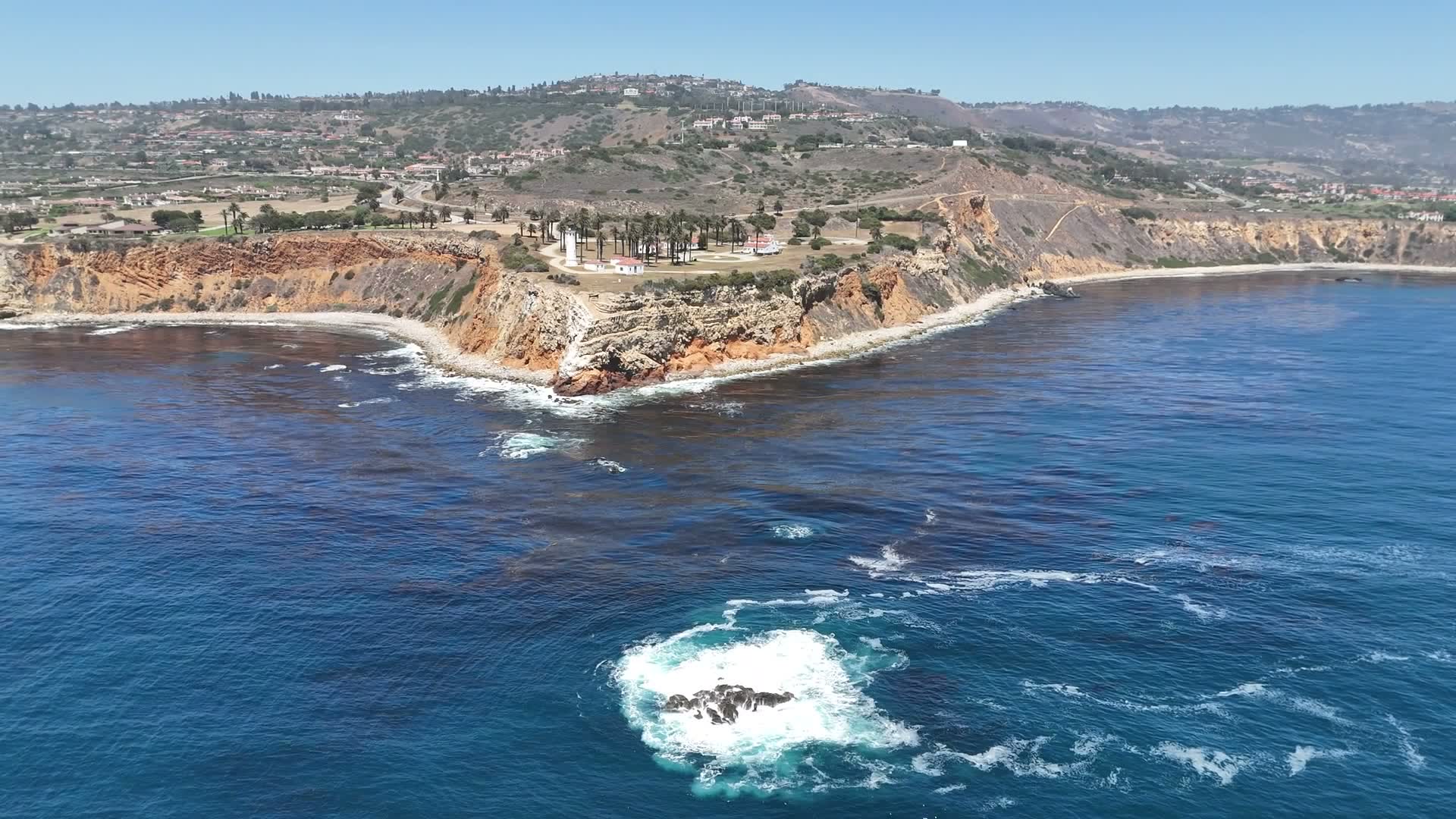
If the home you are buying sits within about a thousand yards of the Pacific, there is a good chance it is inside the California Coastal Zone. That line, drawn in 1977, decides whether a second layer of land use law applies to the lot. It shapes what you can build, how you can rent, and what you inherit when you buy. The address lookup on the map tells you whether a home is inside the zone and who issues the permit there, and the Coastal Zone layer draws the line. This is what it means in plain English, with the law behind each point.
Where the zone is
The Coastal Act defines the zone as the land and water from the Oregon border to Mexico, running inland generally 1,000 yards from the mean high tide line. In significant habitat and recreational areas it reaches the first major ridgeline or five miles, whichever is less. In developed urban areas it is often less than 1,000 yards (Public Resources Code 30103). The Coastal Commission adopted detailed maps on March 1, 1977, and those inked lines are the official boundary. The digital boundary on any map, including mine, is a copy that the Commission has not adopted and that is not binding on it. When a lot sits near the line, the Commission issues a written boundary determination for a filing fee (14 CCR 13255.0 and 13255.1).
Almost everything is development
The Act defines development broadly. Grading, a new fence, a change in the intensity of use, demolition and removing major vegetation all count (PRC 30106). Development needs a coastal development permit unless an exemption applies (PRC 30600). Most cities in Los Angeles and Orange County have a local coastal program certified by the Commission, and the city issues the permit under it. The Commission issues permits itself where there is no certified program, which as of July 2026 includes the City of Los Angeles, Hermosa Beach, Santa Monica, Torrance, Seal Beach, Costa Mesa, Aliso Viejo and San Clemente, and on tidelands and public trust lands everywhere (PRC 30519). In the City of Los Angeles, a home near the water sits in the dual permit jurisdiction: the city issues its permit, and the Commission must issue a second one (PRC 30601).
What you can do without a permit
Improvements to an existing single family home are exempt (PRC 30610(a)), but not on a beach, in a wetland, in sensitive habitat, in an area the local plan designates highly scenic, or within 50 feet of a coastal bluff edge. Between the sea and the first public road, or within 300 feet of a beach, an addition of 10 percent or more in floor area or height needs a permit, and so does a seawall, dock or similar detached structure (14 CCR 13250). Repair and maintenance is exempt, with exceptions for shoreline work and work near bluffs (PRC 30610(d), 14 CCR 13252).
The biggest trap for a remodel is the 50 percent rule: replace half or more of the house and it is a new structure that needs a full permit.
Statewide, replacing half or more of a house is a replacement structure that needs a full permit, not maintenance (14 CCR 13252(b)). Malibu measures it by exterior walls, and if the count crosses 50 percent mid project, work stops and every nonconformity must be brought up to current standards. The Venice plan uses the same exterior wall test, and Laguna Beach treats a major remodel as the point at which an oceanfront home must come into conformity with its plan. Before you plan a down to the studs remodel on a coastal lot, read the local program's definition.
ADUs and short term rentals
State ADU law does not override the Coastal Act (Government Code 66329). A coastal permit may still be needed, but a city must decide it within 60 days without a public hearing, and since 2025 the city's ADU decision cannot be appealed to the Commission.
Short term rental rules in the coastal zone must be in the local coastal program or approved by permit. The Commission said so in a December 2016 letter to every coastal planning director, adding that it has not supported blanket bans. In 2022 the Court of Appeal held that Manhattan Beach's ban was an amendment that needed Commission approval it never got. In March 2026 a judge ruled the same way on Hermosa Beach's ban, and the city chose not to appeal. Newport Beach, Long Beach and Laguna Beach had their programs certified instead: a cap of 1,550 permits in Newport Beach, 350 non primary residence rentals in Long Beach's coastal zone, and no new units in Laguna Beach's residential zones. If renting the home short term is part of your plan, check the certified program, not just the municipal code.
Appeals
After a city approves a permit, certain projects can be appealed to the Commission: those between the sea and the first public road, within 300 feet of a beach or the mean high tide line, within 100 feet of a wetland, estuary or stream, or within 300 feet of the top of a coastal bluff (PRC 30603). The window is ten working days from the day the Commission receives the city's notice. The applicant, any aggrieved person who took part locally, or two commissioners can appeal. The Commission first decides whether the appeal raises a substantial issue. If it does, it takes over the application and hears it fresh. For a buyer this means a permit the seller shows you is not final until that window has closed.
Public access and the shoreline
Development may not interfere with the public's right of access to the sea (PRC 30211). The Commission has required more than 2,000 offers to dedicate public access easements as permit conditions. They are recorded, they run with the land and bind successors, and they stay irrevocable for 21 years from recording. Read every exception on the preliminary title report. Blocking an accessway with a gate, fence or no parking sign can draw a penalty of up to $11,250 a day (PRC 30821).
Seawalls are allowed only to protect existing structures in danger from erosion, and only when designed to limit sand loss (PRC 30235). New development must not create the need for one (PRC 30253). In practice that means bluff top and beachfront permits carry recorded conditions: assumption of risk, waiver of liability, no future shoreline protective device, and an agreement to remove the structure if it becomes threatened. The Commission's sea level rise guidance, adopted in 2015 and updated in 2018 and 2024, assumes a 75 year life for a bluff top home unless the local program says otherwise. Those conditions bind you as the next owner and they matter to your insurer.
After a disaster
A structure destroyed by a disaster can be replaced without a permit if it is the same use, in the same place, and no more than 10 percent larger (PRC 30610(g)). After the January 2025 fires the Governor went further. Executive Order N-4-25 suspended the Coastal Act permit requirement for rebuilds within 110 percent of the prior footprint and height, N-14-25 directed the Commission not to interfere, and N-20-25 made the local permit decision determinative and not appealable. The Commission acknowledged in March 2025 that qualifying rebuilds are exempt.
Enforcement follows the land
Violations stay with the property. The Commission can record a Notice of Violation of the Coastal Act against the title, and the recorded notice is notice to every later owner (PRC 30812). Civil penalties run from $500 to $30,000 per violation, and $1,000 to $15,000 per day when the violation is knowing (PRC 30820). The Commission's enforcement page says current owners are responsible for resolving violations even when the work predates them. An unpermitted deck, fence or bluff stairway becomes your problem the day escrow closes.
Before closing
The coastal zone is not on the statutory Natural Hazard Disclosure Statement (Civil Code 1103.2). C.A.R.'s Statewide Buyer and Seller Advisory warns that a property within the Commission's jurisdiction may face limits on the ability to remodel, build or rebuild, and tells buyers to investigate during the contingency period. Here is the list I work through on a coastal lot.
- Search the Commission's Public Data Portal by address or parcel number for permits, exemptions, appeals and violations.
- Read every recorded easement and deed restriction on the preliminary title report: access offers, no future seawall and assumption of risk conditions, open space restrictions, notices of violation.
- Read the certified local coastal program's zoning for the lot, not just the city's zoning code.
- Order a boundary determination from the Commission if the line is close.
- Ask the city, or the Commission's South Coast District office at 301 E. Ocean Blvd., Suite 300, Long Beach, (562) 590-5071, which covers Los Angeles and Orange County south of Malibu.
Questions People Ask
How do I know whether a home is in the Coastal Zone?
Type the address into the map on this site. The report says whether the lot is inside the Commission's digital boundary and which jurisdiction issues the coastal development permit. For a lot near the line, the Commission issues a written boundary determination; the digital line is not binding.
Can I remodel a home in the Coastal Zone without a coastal permit?
Improvements to an existing single family home are usually exempt, but not within 50 feet of a bluff edge, on a beach, in sensitive habitat or a designated scenic area, and near the shore an addition of 10 percent or more needs a permit. Replacing half or more of the house is a new structure that needs a full permit.
Can I rent a coastal home short term?
Only under rules the Coastal Commission has certified in the city's local coastal program or approved by permit. Newport Beach, Long Beach and Laguna Beach have certified programs; bans in Manhattan Beach and Hermosa Beach were struck down because they were never certified.
Sources: the California Coastal Act (Public Resources Code 30103, 30106, 30211, 30235, 30253, 30519, 30600, 30601, 30603, 30610, 30625, 30812, 30820 and 30821); 14 CCR 13250, 13252 and 13255; the Commission's Coastal Zone Boundary, appeals, enforcement and Public Data Portal pages; the Commission's July 2026 ADU guidance and Government Code 66329; the Commission's December 6, 2016 letter on short term rentals; Keen v. City of Manhattan Beach (2022); the Long Beach, Newport Beach and Laguna Beach LCP amendment records; the 2024 Sea Level Rise Policy Guidance; Executive Orders N-4-25, N-14-25 and N-20-25; Civil Code 1103.2 and the C.A.R. Statewide Buyer and Seller Advisory.

Ian Zeljak
Realtor® · Realty ONE Group United · CA DRE# 02051683
Contact
Let's Talk About Your Next Move
Selling a home anywhere in Los Angeles or Orange County, looking for the right neighborhood, or just curious what your street is doing. The conversation costs nothing.